


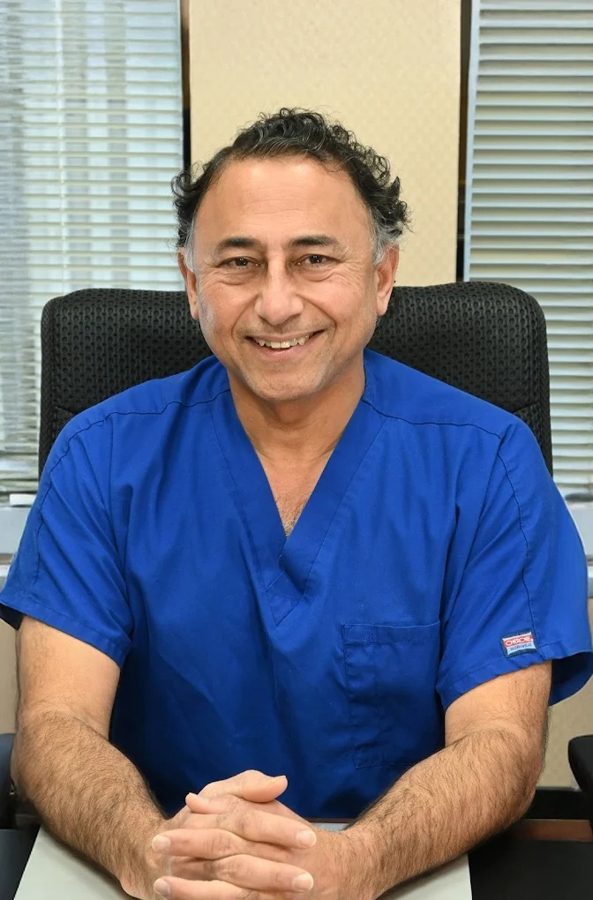
A fleshy growth on the white of your eye may be a pterygium, especially if it extends onto the clear front surface called the cornea. It may cause irritation or affect vision, but a small growth does not always need surgery. In this short video, Rajesh Khanna, MD, of Khanna Vision Institute explains what to look for and why an eye exam helps you decide what to do next.
What is a pterygium?
Dr. Khanna describes a pterygium as a growth that creeps onto the cornea from one side of the eye. It can start on the side toward your nose or the side away from it. The American Academy of Ophthalmology (AAO) describes it as a growth of fleshy tissue, with blood vessels, on the conjunctiva, the clear covering of the white of the eye. It can stay small, or it can grow large enough to cover part of the cornea.
Why does a pterygium grow?
The exact cause is not fully understood, but long-term exposure to ultraviolet (UV) light is an important risk factor. Wind, dust and dry conditions can also contribute to irritation. A pterygium contains abnormal tissue and blood vessels; it is not a normal way for the eye to nourish the cornea. The AAO recommends protection from sun, wind and dust, including UV-blocking sunglasses.
What are the symptoms of a pterygium?
Some growths stay small, while others spread. In the video, Dr. Khanna discusses how a large or advanced pterygium may interfere with vision and, less commonly, restrict eye movement or cause double vision. A pterygium can also distort the cornea and cause astigmatism. The AAO also lists redness, a gritty or burning feeling, itching and blurry vision. Not everyone has every symptom, and many of these overlap with other eye problems, which is one more reason to have it checked.
When should a pterygium be treated?
Dr. Khanna's advice in the video is to remove a pterygium before it causes those problems. The AAO adds that many pterygia do not need treatment, and that lubricating drops can ease irritation; an eye doctor may prescribe a short course of anti-inflammatory drops when appropriate, with surgery usually recommended once the growth is large enough to cause problems. A small, stable pterygium may only need monitoring. A growth moving toward the center of the cornea, changing vision or causing persistent discomfort deserves a discussion about removal. Protecting your eyes from sun, wind and dust helps in either case.
What are the treatment options?
Treatment depends on what your pterygium is doing. Options include watching it, lubricating drops and surgery. At Khanna Vision Institute, Dr. Khanna removes the pterygium in the office with numbing drops and covers the area with a thin graft of your own tissue, held with biologic glue instead of stitches. The goal of the graft is to lower the chance of regrowth. Recovery and results vary from person to person, and risks include regrowth, infection and temporary blurred vision. You can read the full details on our pterygium surgery page.
How does the free VIP video consult work?
You start with a free VIP photo and/or video consult. You can share photos, ask questions and discuss possible next steps before traveling to the office. A photo or video consultation does not replace the in-person examination needed to confirm the diagnosis and plan surgery. The number of visits depends on your findings and treatment. We have two offices: 9100 Wilshire Blvd, Suite 265E, Beverly Hills, CA 90212, (310) 482-1240, and 31824 Village Center Rd, Suite F, Westlake Village, CA 91361, (805) 230-2126.
Frequently asked questions
Does every pterygium need surgery?
No. Small growths that are not causing symptoms are often watched, and drops can ease redness and irritation. Surgery is usually considered when a pterygium is growing, affecting vision or comfort, or bothering you cosmetically. An exam decides which applies to you.
Can a pterygium come back after surgery?
It can. A graft of your own tissue lowers the chance of regrowth, but no technique can rule it out, and we do not promise it will not return.
Is the first consult really free?
Yes. The VIP photo and/or video consult for pterygium is free. You can send photos or talk by video, so you can start from home.
Will insurance cover pterygium surgery?
Sometimes. When a pterygium causes astigmatism or blocks vision, it is often considered medically necessary and may be covered. When it is removed for appearance alone, it is usually self-pay. We help you sort this out at your consult.
Take the next step
If you have a growth on your eye, request your free VIP video consult, read our pterygium questions and answers on the website or call us at (310) 482-1240 (Beverly Hills) or (805) 230-2126 (Westlake Village).
Rajesh Khanna, MD is a board-certified ophthalmologist and UCLA clinical instructor, Jules Stein Eye Institute, with 25+ years in practice and 25,000+ procedures.