

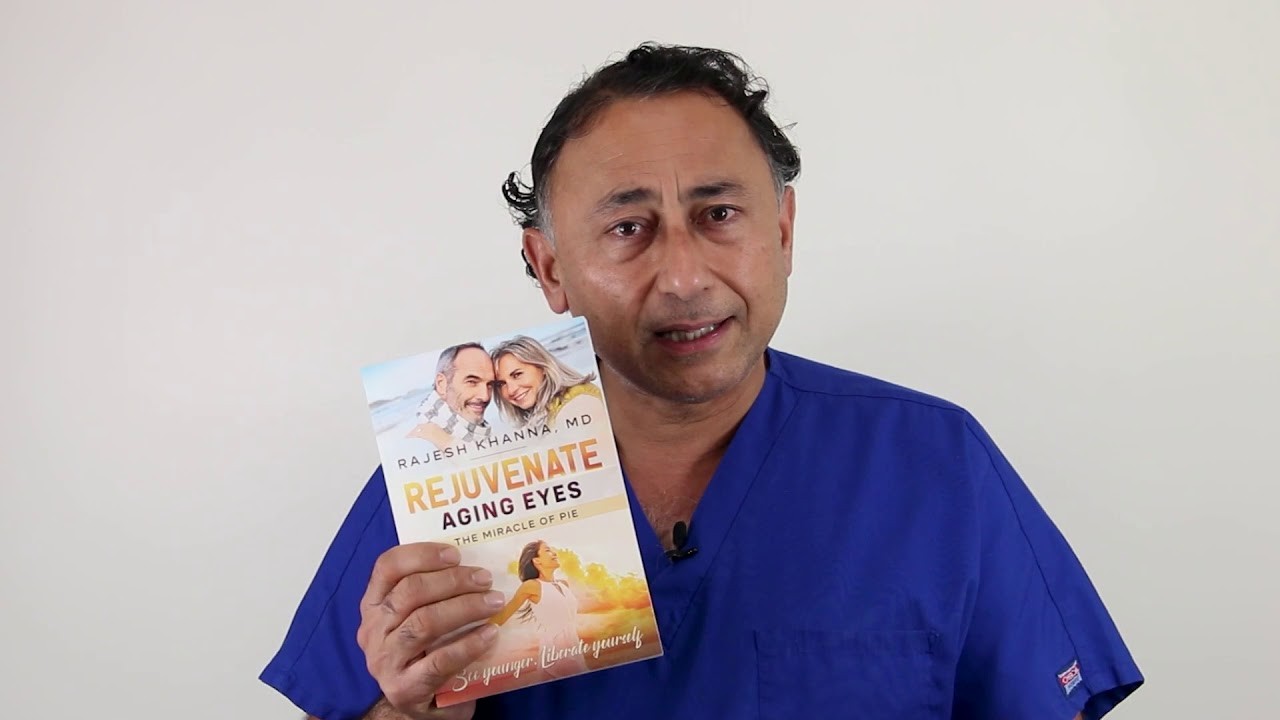
Progressives that make the floor swim. Bifocals with a line you keep looking through. Contacts you take out by evening. If you are over 45, you may have tried them all. In this video, Dr. Khanna focuses on a part of the answer most people never think about: the brain.
"The vision will continue to get even better through neuro adaptation." Rajesh Khanna, MD
What is neuroadaptation?
It is your brain learning to use new visual information. After a lens implant, your eyes send a new kind of signal and the brain adjusts how it interprets it. Dr. Khanna says his book explains the role of the brain and how you can train your eyes to see even better over time.
Why does seeing with both eyes matter?
Because the brain blends two views into one. Dr. Khanna says PIE can give binocular vision, which he considers better than monocular vision, where one eye does the work for a distance. PIE stands for presbyopic implants in the eye. It is a refractive lens content exchange for people over 45: the natural lens is replaced with an advanced implant designed to help you see at different distances. Read more on our PIE page.
What will you find in his book?
Real-life examples of people who had the procedure, what they struggled with before and how it changed their lives, plus pictures and diagrams of how the eye works. He says it is easy to read. Call us to ask for a copy.
Who is PIE for?
PIE is for people over 45 who find it hard to read up close or struggle with progressives, bifocals, trifocals or contacts. Your exam decides whether it fits your eyes.
Can you start without a long drive?
Yes. You can begin with a video consultation from home, and the process takes only a few visits. We have two offices. Call Beverly Hills at (310) 482-1240 (9100 Wilshire Blvd, Suite 265E, Beverly Hills, CA 90212) or Westlake Village at (805) 230-2126 (31824 Village Center Rd, Suite F, Westlake Village, CA 91361). We accept PPO plans only. We do not accept HMO plans or Medi-Cal.
Frequently asked questions
What is neuroadaptation after PIE?
It is the brain adjusting to the new visual signals after a lens implant. Dr. Khanna says vision can keep improving as the brain adapts.
What is PIE?
PIE stands for presbyopic implants in the eye. It is a refractive lens content exchange for people over 45: the natural lens is replaced with an advanced implant designed to help you see at different distances.
Rajesh Khanna, MD is a board certified ophthalmologist and UCLA clinical instructor, Jules Stein Eye Institute, with 25+ years in practice and 25,000+ procedures.