


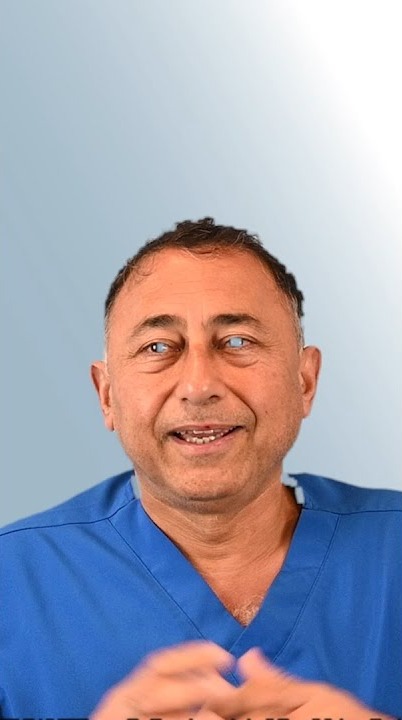
You can see clearly and still have early diabetic eye disease. Over time, high blood sugar can damage blood vessels in the retina before you notice a change. In this short video, Rajesh Khanna, MD, of Khanna Vision Institute discusses symptoms worth reporting. Regular dilated eye exams remain important even when your eyes feel fine.
What does Dr. Khanna say about diabetes and your eyes?
Dr. Khanna points out that the earlier symptoms are confusing. If you start noticing more floaters or blurred vision, do not assume allergies or dry eyes are responsible. His advice is to tell your doctor that you have diabetes and that these changes are recent, so they can focus on it. He lists fluctuating vision, dark or empty spots in your vision and difficulty seeing at night, and in late stages, vision loss that can come from problems with the cornea, the lens or, in the worst case, diabetic retinopathy. His message: early diagnosis is important.
What is diabetic eye disease?
Diabetic eye disease is a group of eye problems that people with diabetes are more likely to get. According to the National Eye Institute (NEI), the most common is diabetic retinopathy, caused by high blood sugar damaging the blood vessels in the retina, the light-sensitive layer at the back of the eye. Diabetes also raises the chances of cataracts and open-angle glaucoma. If you are managing cataracts as well, see our page on cataract surgery.
Can diabetic eye disease develop without symptoms?
The NEI says early diabetic retinopathy usually has no symptoms at all. When symptoms do appear, they can include blurry vision that comes and goes, or dark floating spots or streaks. A dilated exam lets an eye doctor look at the retina directly.
How often do you need a diabetes eye exam?
There is no single schedule for everyone. The ADA's 2026 Standards of Care recommend a first dilated eye exam at diagnosis for type 2 diabetes and 5 years after the onset of diabetes for type 1. If your exams are normal and your blood sugar is in your target range, screening every 1 to 2 years may be considered. If any retinopathy is found, exams are generally at least yearly, and more often if it is progressing. Pregnancy changes the plan, so tell your eye doctor early.
What happens at the exam, and what comes next?
A dilated eye exam is usually straightforward, although the drops may briefly sting and cause temporary light sensitivity or blurred near vision. Drops widen your pupil so the doctor can check the retina and look for other eye problems. If something is found, the next step depends on what the exam shows: closer monitoring, treatment or a referral to a retina specialist. Treatment may reduce the risk of further vision loss and can improve vision in some cases, but established retinal damage may be permanent. Outcomes depend on the condition and its severity. Seek urgent eye care for sudden vision loss, a sudden increase in floaters, flashes or a curtain-like shadow.
Is this the same as a vision correction consult?
No. A diabetes eye exam checks the health of your eyes. It is not a LASIK or SMILE consult, and it is not a free VIP consult. Tell us about your diabetes at any visit.
Where can you get checked?
We have two offices: 9100 Wilshire Blvd, Suite 265E, Beverly Hills, CA 90212, (310) 482-1240, and 31824 Village Center Rd, Suite F, Westlake Village, CA 91361, (805) 230-2126. If you have insurance, we start with an annual eye exam through your plan. Self-pay patients can ask which exam fits, and we explain the cost before you book. We accept PPO insurance plans. We do not accept HMO or Medi-Cal plans.
Frequently asked questions
Can I have diabetic eye disease and still see well?
Yes. The National Eye Institute (NEI) says the early stages of diabetic retinopathy usually have no symptoms. That is why a dilated eye exam matters even when your vision seems fine.
How often should someone with diabetes have an eye exam?
The American Diabetes Association (ADA) recommends a first dilated exam at diagnosis for type 2 diabetes and 5 years after the onset of diabetes for type 1. After normal exams, every 1 to 2 years may be considered, and at least yearly if any retinopathy is found. Your eye doctor and your diabetes team set your own schedule.
Can an eye exam prevent diabetic retinopathy?
No. An exam finds changes early so you and your doctors can act on them. Managing blood sugar, blood pressure and cholesterol can help lower your risk, and treatment, when needed, can help keep vision from getting worse. Some damage can be permanent, so early detection and follow-up are important.
Is a diabetes eye exam the same as a LASIK consult?
No. A diabetes eye exam checks the health of your eyes. A LASIK or SMILE consult checks whether you are a candidate for vision correction.
Will insurance cover my eye exam?
If you have insurance, we start with an annual eye exam through your plan, and coverage depends on your plan. We accept PPO insurance plans. We do not accept HMO or Medi-Cal plans.
Take the next step
If you have diabetes and are not sure when your last eye exam was, book an eye exam online or call (310) 482-1240 (Beverly Hills) or (805) 230-2126 (Westlake Village).
Rajesh Khanna, MD is a board-certified ophthalmologist and UCLA clinical instructor, Jules Stein Eye Institute, with 25+ years in practice and 25,000+ procedures.