



Lens solutions · Presbyopia
PIE: lens implants for vision after 40
Reviewed by Rajesh Khanna, MD
PIE (Presbyopic Implant in Eye) replaces your natural lens with an advanced implant designed to reduce dependence on reading glasses. It is a form of refractive lens exchange for presbyopia, the loss of near focus that starts in the 40s. Because the natural lens is replaced, a cataract cannot form later.
How it works
What PIE is
After about 40, the natural lens stiffens and near focus fades. That is why arms start to feel too short for menus and phones. Laser vision correction reshapes the cornea, but it doesn’t change the aging lens.
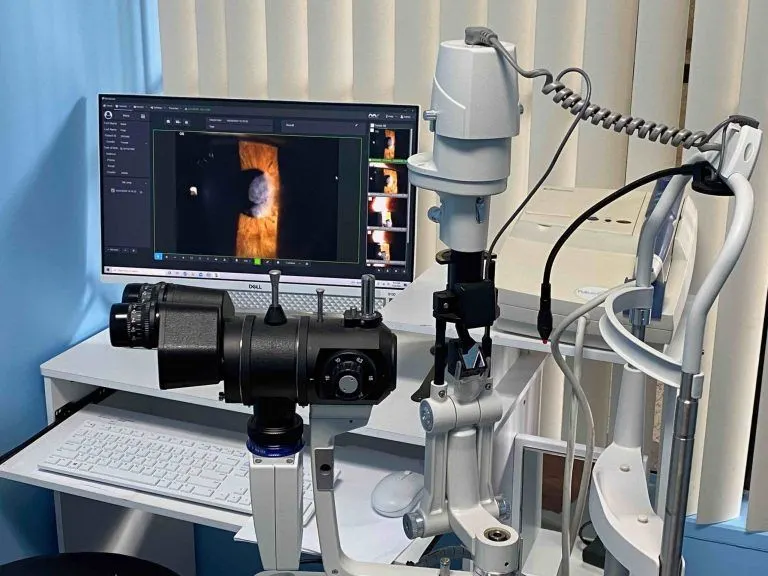
PIE replaces the natural lens with an implant designed for range of vision. Dr. Khanna matches the lens design to your eyes and your day, whether that is screens, reading, driving at night or sports.
Dr. Khanna is the author of Rejuvenate Aging Eyes: The Miracle of PIE (2020).
Compare
Lens designs Dr. Khanna may discuss
The right lens depends on your eye anatomy and how you use your vision. Your consult covers the tradeoffs.
| Feature | Lens type | Typical strengths | Typical tradeoffs |
|---|---|---|---|
| Extended depth of focus (EDOF) | Smooth distance and intermediate vision; screens | May need readers for fine print | |
| Trifocal | Near, intermediate and distance | Some patients notice halos at night, especially early on | |
| Light-adjustable | Can be fine-tuned after surgery | Several light-treatment visits and UV-protective glasses until locked in |
Candidacy
Are you a candidate for PIE?
PIE is lens surgery, so it suits a different group than laser vision correction.
Often a good fit
- Age 40 or older with presbyopia
- Tired of reading glasses, bifocals or progressives
- Higher prescriptions, including farsightedness
- Early lens changes
- Healthy retina and cornea
May not be right, or not yet
- Under 40, where laser or EVO ICL may suit better
- Certain retina, cornea or optic nerve conditions
- Uncontrolled eye disease or inflammation
- Expectations of perfect vision at every distance in every light
Already have a cataract?
Then lens surgery is cataract surgery. See laser cataract surgery for how insurance and self-pay visits work.
Procedure day
What PIE day is like
Measure
Detailed measurements of your eye select the implant power and design.
Numb and relax
Numbing drops and calming medicine. You stay comfortable and awake.
Replace the lens
The natural lens is gently removed and the implant placed. A laser may be used for parts of the procedure if needed.
Go home
Same-day surgery with a shield and drops. One eye is usually treated at a time.
Recovery
Recovery
Many patients notice brighter, clearer vision within days. The brain adapts to a new lens over weeks, so near vision often keeps improving.
Next day
Follow-up visit.
First week
Drops as directed; avoid rubbing and swimming.
Weeks 2–6
Adaptation continues. The second eye is often scheduled in this period.
Call the surgical team right away for increasing pain, sudden vision loss, marked redness or discharge.
Benefits and risks
The honest version
Why people consider PIE
- Less dependence on reading glasses
- Treats presbyopia and a distance prescription together
- A cataract cannot form in the treated eye
- Includes LASIK or SMILE and YAG laser fine-tunings if needed
What no one can promise
PIE is intraocular surgery. Possible risks include glare, halos or starbursts, reduced contrast, a need for glasses for some tasks, inflammation, raised eye pressure, infection, retinal detachment and clouding behind the implant that may need a YAG laser.
Multifocal and extended-range lenses involve tradeoffs, and not every eye is suitable. We cannot promise freedom from glasses for every task.
Video
Watch: PIE patients share their experience
Your surgeon
The technology is advanced. The judgment is personal.
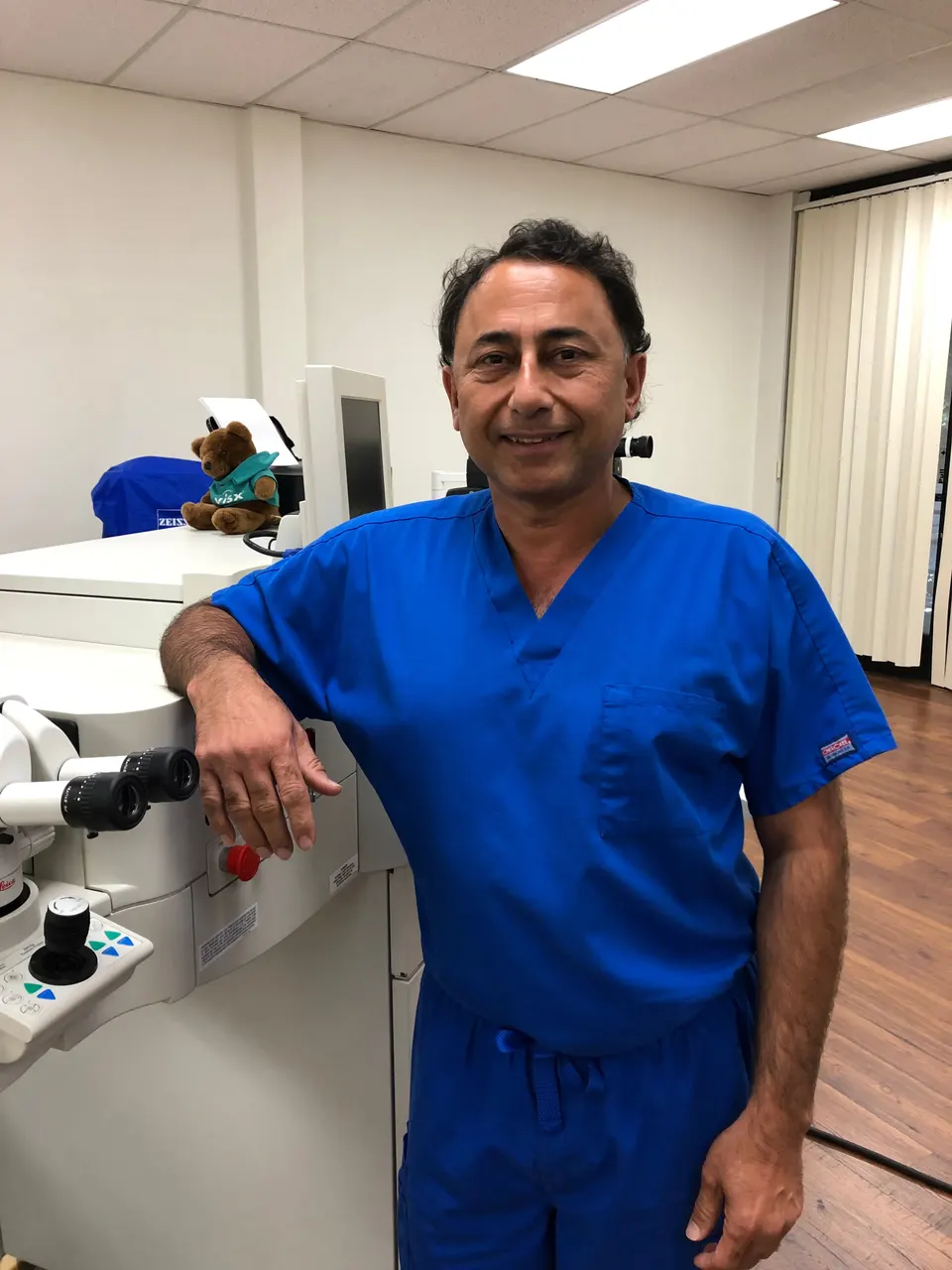
Rajesh Khanna, MD is a UCLA clinical instructor with 25+ years in practice and 25,000+ vision procedures.
At your visit, Dr. Khanna decides whether surgery is the right choice, which procedure fits your eyes, and how to manage the result. The aim is the safest path to the vision that matters in your life, not the newest procedure for everyone.
"I've operated on my own mother, my wife and my son." (Dr. Khanna)
About Dr. KhannaCost and financing
What PIE costs
| Option | Per eye, per month |
|---|---|
| PIE with insurance | About $288 for 24 months |
| PIE cash (self-pay) | About $371 for 24 months |
Monthly amounts are for qualified applicants through our financing partners. Approval, APR and terms are set by the lender, not by Khanna Vision Institute.
Both figures include all exams and measurements, surgery center and anesthetist fees, the implant, the robotic laser if needed, surgery by Dr. Khanna, follow-ups for two years, dry eye therapy, and LASIK or SMILE and YAG if needed.
If you have a cataract, medical insurance may cover the basic lens replacement; clear lens exchange and premium lens upgrades are usually not covered. HSA and FSA funds can usually be used.
We have dropped, and will continue to drop, HMO and optical (vision) insurance plans. For questions about a specific plan, call (310) 482-1240.
Not a candidate for PIE?
- Reading glasses or progressives: still a valid choice
- EVO ICL: for nearsightedness when presbyopia isn’t the main issue
- LASIK: distance correction; doesn’t stop presbyopia
- Laser cataract surgery: when a cataract is present
Vision questionnaire
Take the 2-minute vision quiz
Four quick questions point you to the options Dr. Khanna will look at first. No name, email or phone needed, and your answers stay on this page.
PIE questions
Is PIE the same as refractive lens exchange?
PIE (Presbyopic Implant in Eye) is a lens-based option: your natural lens is replaced with an implant chosen for your range of vision. It is permanent, and a cataract cannot form in the treated eye, so you will not need cataract surgery later.
Will I ever need cataract surgery after PIE?
No. A cataract forms in the natural lens, which PIE replaces. Some patients later develop clouding behind the implant, which a quick YAG laser treatment clears; YAG is included in your price.
Will I need reading glasses after PIE?
Many patients use them much less. Some still want readers for fine print or dim light, depending on the lens chosen.
How much does PIE cost?
PIE is about $288 per eye per month for 24 months with insurance, or about $371 per eye per month for 24 months cash, for qualified applicants through our financing partners.
Are both eyes done the same day?
Usually one eye is treated at a time, with the second eye scheduled once the first has settled.
VIP consult
Request your VIP consult
Your first visit is a VIP consult: more time with each patient, and enough time with the surgeon, Dr. Khanna. Candidacy is decided there, and the answer may be a procedure or no surgery at all.
- VIP consult for SMILE Pro, SMILE, LASIK, EVO ICL, PIE, PRK and LASEK
- A surgery consultation, not a full eye exam
- In-office or virtual, as offered
Beverly Hills: Monday and Thursday · Westlake Village: Tuesday, Wednesday and Friday · 8 AM–5 PM, last appointment 4 PM. Saturday by arrangement only: please call.
Sources
Medically reviewed by Rajesh Khanna, MD (review pending before launch). This page is educational and does not replace an exam. Eligibility, risks, benefits, alternatives and recovery are reviewed with your surgeon. Results vary.